
Can Insurance Cover Braces? A Complete Guide to Costs, Coverage, and Payment Options
Getting braces is a major decision for many people who want to improve their smile, correct bite problems, or protect long-term oral health. However, the cost of orthodontic treatment can make people hesitate before starting.
One of the first questions patients ask is:
Can insurance cover braces?
The answer is sometimes. Some dental insurance plans include orthodontic benefits that help pay for braces, while others provide limited coverage or exclude orthodontic treatment completely.
Your coverage depends on your insurance policy, age, treatment needs, and the rules set by your insurance provider. Understanding these details before beginning treatment can help you plan your expenses and avoid unexpected bills.
Does Dental Insurance Cover Braces?
Some dental insurance plans cover braces under orthodontic benefits. Unlike regular dental cleanings or fillings, braces are usually considered orthodontic treatment, which often has separate coverage rules.
If your plan includes orthodontic coverage, your insurance may pay part of the treatment cost. However, most plans do not pay the entire amount.
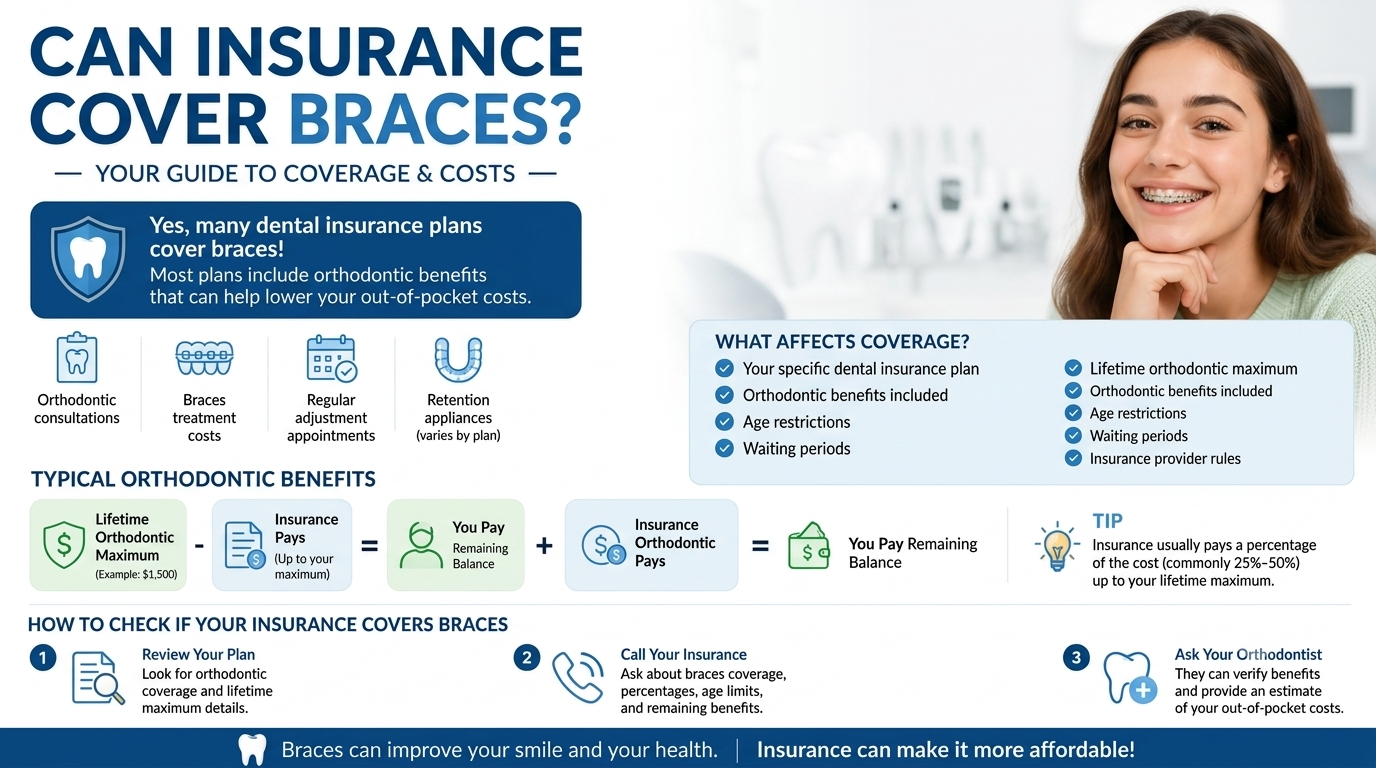
Insurance coverage may depend on:
- Your specific dental insurance plan
- Whether orthodontic treatment is included
- Your age and eligibility requirements
- The reason braces are needed
- Your plan’s lifetime orthodontic maximum
- Waiting periods or approval requirements
A dental insurance plan that covers routine dental care does not automatically mean it covers braces. Always check your benefits before starting treatment.
How Much Do Braces Cost With Insurance?
The cost of braces varies depending on several factors, including:
- Type of braces selected
- Treatment complexity
- Location
- Orthodontist fees
- Length of treatment
Without insurance, braces commonly cost several thousand dollars. Insurance can reduce your out-of-pocket expense if orthodontic benefits are included in your plan.
| Example Treatment Cost | Insurance Benefit | Estimated Patient Cost |
|---|---|---|
| $4,000 | $1,000 | $3,000 |
| $5,500 | $1,500 | $4,000 |
| $7,000 | $2,000 | $5,000 |
These numbers are examples only. Your actual cost depends on your orthodontist’s fees and your insurance policy.
Many dental plans also have a lifetime orthodontic maximum. This means your insurance company will only pay up to a specific amount for orthodontic care.
For example:
- Total braces cost: $6,000
- Insurance orthodontic benefit: $1,500
- Remaining balance: $4,500
What Types of Braces Can Insurance Cover?
Insurance companies usually do not focus only on the type of braces. They generally look at whether orthodontic treatment is included in your policy.
Traditional Metal Braces
Traditional metal braces are the most common orthodontic option.
They are often used for:
- Crowded teeth
- Crooked teeth
- Bite problems
- Significant alignment issues
Many insurance plans that include orthodontic benefits cover traditional braces.
Ceramic Braces
Ceramic braces work similarly to metal braces but use tooth-colored brackets that are less noticeable.
Some insurance plans may cover ceramic braces, but others may only cover the cost of standard metal braces and require patients to pay the difference.
Lingual Braces
Lingual braces are attached behind the teeth, making them less visible.
Because they require specialized treatment and can cost more, insurance coverage may vary.
Always confirm coverage before choosing a specific orthodontic option.
What Does Braces Insurance Usually Pay For?
When orthodontic coverage is available, insurance may help with:
- Orthodontic treatment fees
- Initial orthodontic consultation
- Regular adjustment appointments
- Certain orthodontic procedures
However, coverage may not include:
- Cosmetic upgrades
- Replacement of lost appliances
- Additional treatment beyond policy limits
- Some retainer costs
Your insurance policy documents provide the final details about what is included.
Are Braces Covered for Adults?
Adult braces coverage depends on the insurance plan.
Some insurance policies include orthodontic benefits for adults, while others only cover children and teenagers.
Adult orthodontic coverage may be more limited because some insurance companies classify certain adult treatments as cosmetic.
Coverage may be more likely when braces are needed for functional reasons, such as:
- Severe bite problems
- Difficulty chewing
- Dental alignment issues affecting oral health
Always confirm your eligibility directly with your insurance provider.
Are Braces Covered for Children?
Many dental insurance plans are designed to provide orthodontic benefits for children and teenagers.
However, coverage is not automatic.
Some plans may require:
- A specific age range
- Orthodontic evaluation
- Prior approval
- Proof that treatment is necessary
Parents should review their child’s dental benefits before scheduling braces treatment.
How to Check If Your Insurance Covers Braces
Before starting orthodontic treatment, follow these steps.
Review Your Insurance Benefits
Look for information related to:
- Orthodontic coverage
- Braces benefits
- Lifetime maximum
- Age restrictions
- Waiting periods
- Percentage of coverage
Your policy may use the term “orthodontics” instead of “braces.”
Contact Your Insurance Provider
Ask clear questions, such as:
- Does my plan cover braces?
- Are adult orthodontic treatments covered?
- What percentage of the cost will insurance pay?
- Is there a lifetime orthodontic limit?
- Do I need approval before starting treatment?
Getting answers in advance can help you understand your expected costs.
Ask Your Orthodontist’s Office
Many orthodontic offices have insurance coordinators who can help estimate your expenses.
They may help with:
- Insurance verification
- Treatment cost estimates
- Payment arrangements
- Financing options
Ways to Reduce Braces Costs Without Insurance
If your insurance does not cover braces, there are still ways to make treatment more affordable.
Choose a Monthly Payment Plan
Many orthodontists offer payment plans that allow patients to divide the total cost into smaller monthly payments.
This can make treatment easier to manage without paying the entire amount upfront.
Use an HSA or FSA
Health Savings Accounts (HSA) and Flexible Spending Accounts (FSA) may help pay for eligible healthcare expenses.
Rules can vary, so check your account requirements before using these funds.
Compare Different Orthodontists
Treatment costs can differ between providers.
During consultations, ask about:
- Total treatment price
- Included services
- Retainers
- Payment options
- Follow-up care
The cheapest option is not always the best choice. Experience and proper treatment planning are important factors.
Look for Dental Discount Programs
Some discount programs may reduce orthodontic costs. These programs are not insurance, but they may provide lower treatment fees through participating providers.
Common Mistakes When Checking Braces Coverage
Assuming All Dental Insurance Covers Braces
Having dental insurance does not mean orthodontic treatment is included.
Always verify your orthodontic benefits.
Starting Treatment Before Confirming Coverage
Beginning braces treatment before checking insurance details can lead to unexpected expenses.
Request a complete cost estimate before starting.
Ignoring Lifetime Orthodontic Limits
Many insurance plans only pay up to a certain amount during your lifetime.
Once that limit is reached, you may need to cover additional costs yourself.
Forgetting About Retainer Costs
Retainers are often needed after braces treatment to help maintain results.
Ask whether retainers are included in your treatment plan.
Braces vs Invisalign: Does Insurance Cover Them Differently?
Many insurance plans group braces and Invisalign under orthodontic treatment.
The main difference is usually not insurance classification but treatment cost and policy restrictions.
| Feature | Braces | Invisalign |
|---|---|---|
| Appearance | Visible brackets and wires | Clear removable trays |
| Removable | No | Yes |
| Maintenance | Requires cleaning around brackets | Easier cleaning |
| Treatment option | Many alignment issues | Many mild to moderate cases |
| Insurance category | Usually orthodontic | Usually orthodontic |
If your plan covers orthodontics, it may provide benefits for both options, depending on your policy.
Frequently Asked Questions About Braces Insurance Coverage
Does insurance cover braces for adults?
Some insurance plans cover adult braces, but many have limitations. Coverage depends on your specific policy and orthodontic benefits.
Does insurance cover braces for children?
Many plans offer orthodontic coverage for children, but requirements and coverage amounts vary.
How much do braces cost without insurance?
Braces costs vary based on the type of braces, treatment complexity, location, and orthodontist fees. A consultation is needed for an accurate estimate.
Can I pay for braces with an HSA or FSA?
Many orthodontic expenses may qualify for HSA or FSA payments, but you should confirm eligibility with your account provider.
Does insurance cover braces and retainers?
Some plans include retainer coverage, while others require patients to pay separately.
Does insurance cover ceramic braces?
Some plans cover ceramic braces, while others only cover the cost equivalent to traditional braces.
Planning Your Braces Treatment Budget
So, can insurance cover braces? Yes, but the amount of coverage depends on your dental insurance plan and orthodontic benefits.
Before beginning treatment:
- Check your orthodontic coverage
- Confirm benefits with your insurance provider
- Ask your orthodontist for a detailed cost estimate
- Understand payment options if insurance does not cover everything
Braces can be a valuable investment in your oral health. Knowing your insurance coverage and financial options before treatment begins can help you make a better decision and avoid unexpected costs.
Disclaimer
The information provided in this article is for general educational purposes only and should not be considered dental, medical, insurance, or financial advice. Insurance coverage for braces varies depending on your insurance provider, policy terms, location, and personal circumstances.
Always verify your specific benefits directly with your dental insurance company and consult a qualified orthodontist or dental professional before beginning treatment.
Costs, coverage details, eligibility requirements, and payment options may change over time. This article does not guarantee insurance approval, specific savings, or treatment outcomes.