
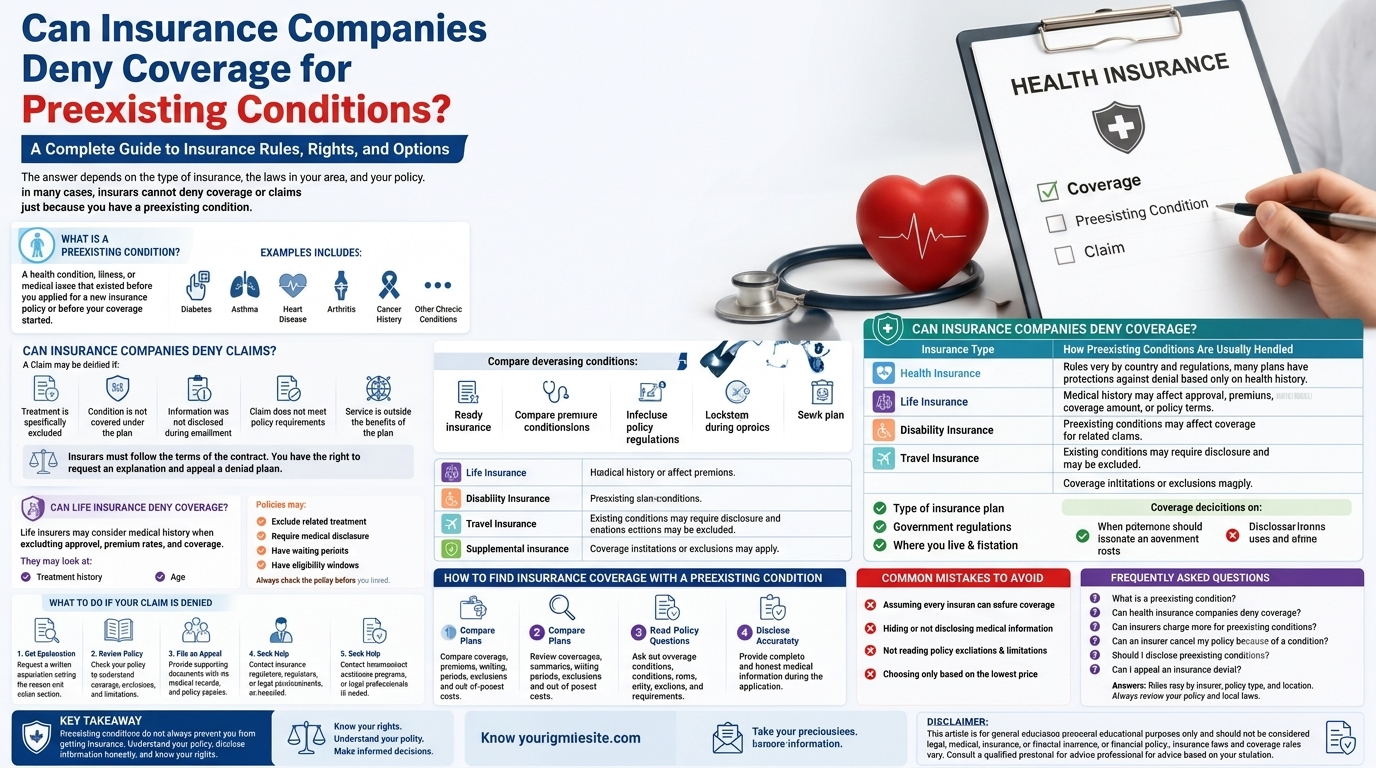
Can Insurance Companies Deny Coverage for Preexisting Conditions? A Complete Guide to Insurance Rules, Rights, and Options
When applying for health insurance, many people worry about one important question:
Can insurance companies deny coverage because of a preexisting condition?
The answer depends on the type of insurance, the country or state where you live, and the rules that apply to your specific policy.
In many modern health insurance systems, especially for major medical insurance, insurers cannot simply refuse coverage or deny claims because someone has a preexisting condition. However, some types of insurance and certain situations may still have restrictions.
Understanding how preexisting conditions work can help you make better decisions when choosing an insurance plan and avoid confusion about what your policy covers.
What Is a Preexisting Condition?
A preexisting condition is a health condition, illness, or medical issue that existed before you applied for a new insurance policy or before your coverage started.
Examples of preexisting conditions may include:
- Diabetes
- Asthma
- High blood pressure
- Heart disease
- Arthritis
- Cancer history
- Chronic conditions requiring ongoing treatment
- Previous surgeries or medical procedures
A condition does not always need to have active symptoms to be considered preexisting. Insurance companies may look at your medical history based on the rules that apply to your policy.
Can Insurance Companies Deny Coverage for Preexisting Conditions?
The answer depends on the type of insurance and applicable regulations.
For many comprehensive health insurance plans, especially those regulated under consumer protection laws, insurers may not be allowed to deny coverage or charge higher premiums simply because you have a preexisting medical condition.
However, some insurance products may have different rules.
Coverage decisions can depend on:
- The type of insurance plan
- Government regulations
- Where you live
- When the policy was purchased
- Whether the condition was disclosed during the application
- Policy exclusions and limitations
Always review the terms of your specific insurance policy.
How Preexisting Condition Rules Work in Health Insurance
Health insurance providers use underwriting rules and policy guidelines to determine coverage.
In some insurance systems, insurers may review medical history before approving coverage. In others, regulations prevent them from using health history to deny access to certain plans.
The rules may affect:
- Whether you can enroll
- What benefits are available
- Waiting periods
- Coverage limitations
- Premium costs
Because insurance laws vary widely, the same medical condition may be treated differently depending on your location and type of coverage.
Can Insurance Companies Deny Claims Because of a Preexisting Condition?
Sometimes, yes, depending on the policy and regulations.
A claim may be denied if:
- The treatment is specifically excluded from the policy
- The condition was not covered under the plan
- Required information was not disclosed during enrollment
- The claim does not meet policy requirements
- The service is outside the benefits included in the plan
However, an insurer generally must follow the rules and terms of the contract when making claim decisions.
If a claim is denied, policyholders usually have the right to request an explanation and appeal the decision.
Types of Insurance and Preexisting Condition Rules
Different insurance products handle preexisting conditions differently.
| Insurance Type | How Preexisting Conditions Are Usually Handled |
|---|---|
| Health Insurance | Rules vary by country and regulations; many plans have protections against denial based only on health history. |
| Life Insurance | Medical history may affect approval, premiums, or eligibility |
| Disability Insurance | Preexisting conditions may affect coverage for related claims |
| Travel Insurance | Existing medical conditions may require disclosure and may be excluded |
| Supplemental Insurance | Coverage limitations may apply |
Always check the policy wording before purchasing any insurance product.
Can Life Insurance Deny Coverage for Preexisting Conditions?
Life insurance works differently from health insurance.
Insurance companies may consider medical history when evaluating:
- Application approval
- Premium rates
- Coverage amount
- Policy terms
A serious preexisting condition does not always mean automatic denial. Some applicants may still qualify but may pay higher premiums.
Factors insurers may consider include:
- Type of condition
- Severity
- Treatment history
- Current health status
- Age
- Lifestyle factors
Providing accurate medical information during the application process is important.
Can Travel Insurance Deny Coverage for Preexisting Conditions?
Travel insurance often has specific rules regarding preexisting conditions.
Some policies may:
- Exclude treatment related to existing conditions
- Require medical disclosures
- Offer coverage only if certain requirements are met
- Include a waiting period or eligibility window
Before traveling, carefully check whether your policy covers medical issues related to existing health conditions.
What Happens If You Do Not Disclose a Preexisting Condition?
Failing to disclose medical information can create serious problems.
Depending on the insurance type and local laws, the insurer may:
- Deny a claim
- Cancel a policy
- Review the application for inaccurate information
Insurance applications usually require honest and complete answers. If you are unsure whether something qualifies as a medical condition that should be disclosed, ask the insurance provider.
How to Find Insurance Coverage With a Preexisting Condition
Having a preexisting condition does not mean you have no insurance options.
Consider these steps:
Compare Different Insurance Plans
Different insurers have different policies, benefits, and exclusions.
Compare:
- Coverage limits
- Premium costs
- Waiting periods
- Exclusions
- Out-of-pocket expenses
Read the Policy Documents Carefully
Important details are often found in:
- Coverage summaries
- Exclusion sections
- Terms and conditions
- Benefit descriptions
Do not rely only on advertisements or verbal explanations.
Ask Direct Questions Before Buying
Before choosing a plan, ask:
- Are preexisting conditions covered?
- Are there waiting periods?
- Are related treatments excluded?
- What documentation is required?
- How are claims reviewed?
Getting answers before enrollment can prevent problems later.
What To Do If Your Insurance Claim Is Denied Because of a Preexisting Condition
If your claim is denied, you should not immediately assume the decision is final.
You can:
Request a Written Explanation
Ask the insurance company why the claim was denied and which policy section supports the decision.
Review Your Policy
Check whether the exclusion or limitation actually applies.
File an Appeal
Many insurance systems allow customers to challenge claim decisions.
Your appeal may include:
- Medical records
- Doctor statements
- Policy documents
- Additional supporting information
Seek Professional Help
For complex disputes, you may consider contacting:
- Insurance regulators
- Consumer assistance programs
- Legal professionals specializing in insurance matters
Common Mistakes People Make About Preexisting Conditions
Assuming Every Insurance Company Can Refuse Coverage
Insurance rules are different depending on the type of insurance and location.
Hiding Medical Information
Not disclosing relevant information can create larger problems later.
Not Reading Policy Exclusions
Many coverage disputes happen because people misunderstand what their policy includes.
Choosing the Cheapest Plan Without Checking Benefits
A lower premium does not always mean better protection.
Frequently Asked Questions About Preexisting Conditions and Insurance
What is considered a preexisting condition?
A preexisting condition is a health issue that existed before a new insurance policy started or before an application was submitted.
Can health insurance companies deny coverage because of preexisting conditions?
This depends on the insurance system and regulations where you live. Many health insurance plans have protections against denying coverage solely because of health history, but rules vary.
Can insurance companies charge more because of preexisting conditions?
Some types of insurance may consider health history when setting prices, while others may have restrictions under applicable laws.
Can an insurance company cancel my policy because I have a medical condition?
Cancellation rules depend on the insurance type, policy terms, and applicable regulations.
Should I disclose a preexisting condition when applying for insurance?
Yes. Providing accurate information helps prevent claim problems and policy disputes.
Can I appeal an insurance denial related to a preexisting condition?
In many cases, policyholders have appeal rights. The process depends on the insurance provider and applicable laws.
Understanding Your Insurance Rights
Preexisting conditions can make insurance decisions more complicated, but they do not always prevent people from getting coverage.
The key steps are:
- Understand your policy before enrolling
- Disclose medical information accurately
- Review exclusions and limitations
- Ask questions about coverage
- Know your rights if a claim is denied
Insurance rules change depending on location, policy type, and regulations. Taking time to understand your coverage can help you avoid unexpected problems and make better decisions about your financial and health protection.
Disclaimer
The information provided in this article is for general educational purposes only and should not be considered legal, medical, insurance, or financial advice.
Insurance laws, regulations, and coverage rules vary by country, state, insurance provider, and policy type. Always review your specific insurance documents and consult a qualified insurance professional, legal advisor, or healthcare professional for advice based on your individual situation.
This article does not guarantee insurance approval, claim acceptance, or specific coverage outcomes.