How Much Homeowners Insurance Do I Need?
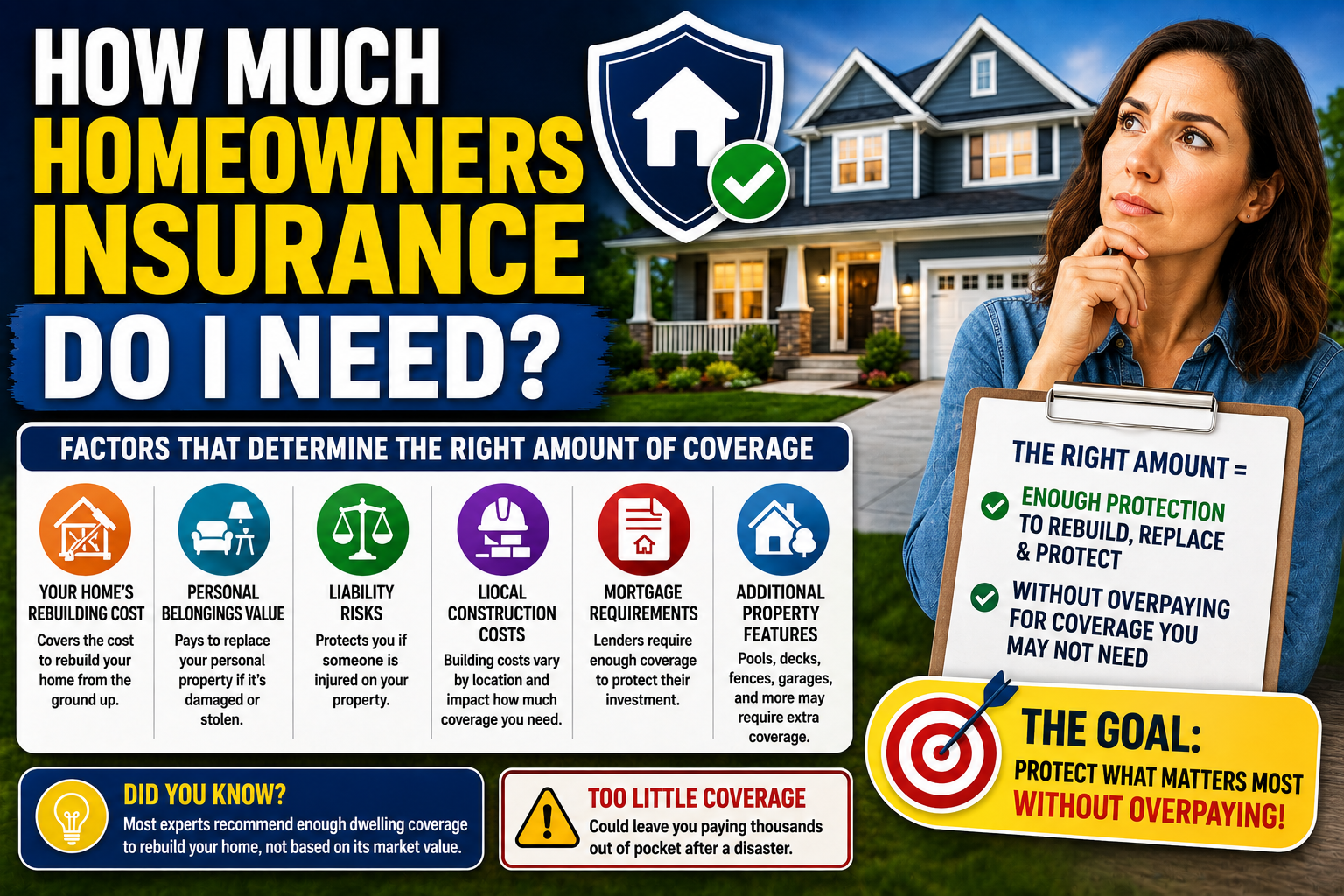
The amount of homeowners’ insurance you need depends on several factors, including:
- Your home’s rebuilding cost
- Personal belongings value
- Liability risks
- Local construction costs
- Mortgage requirements
- Additional property features
Choosing the right amount of homeowners’ insurance is important because too little coverage may leave homeowners financially exposed after disasters, while too much coverage may increase premiums unnecessarily.
The goal is to have enough protection to rebuild the home, replace belongings, and protect against liability claims without overpaying for coverage that may not be necessary.
Understanding the Main Types of Homeowners Insurance Coverage
A standard homeowners’ insurance policy usually includes several categories of protection.
Dwelling Coverage (Coverage A)
Dwelling coverage protects the physical structure of the home.
This may include:
- Walls
- Roof
- Floors
- Built-in appliances
- Attached garages
For most homeowners, dwelling coverage is the most important part of the policy.
How Much Dwelling Coverage Do You Need?
Homeowners generally need enough dwelling coverage to:
- Rebuild the home completely after a covered disaster
This is called:
- Replacement cost coverage
The rebuilding cost is not always the same as:
- Market value
- Purchase price
- Real estate listing value
Land value is usually not included in rebuilding costs.
How to Estimate Rebuilding Costs
A common method is:
- Home square footage × local rebuilding cost per square foot
Example
If:
- A 2,000-square-foot home
- Costs $200 per square foot to rebuild
Estimated dwelling coverage may need to be around:
- $400,000
Construction costs vary significantly by location and materials.
Personal Property Coverage (Coverage C)
Personal property coverage helps replace belongings inside the home.
This may include:
- Furniture
- Electronics
- Clothing
- Appliances
- Jewelry
- Personal items
Many policies automatically set personal property coverage at:
- 50% to 70% of dwelling coverage
How Much Personal Property Coverage Do You Need?
Creating a home inventory may help estimate the total value of belongings.
Consider:
- Furniture replacement costs
- Electronics
- Clothing
- Collectibles
- High-value items
Some valuables may require additional endorsements or scheduled coverage.
Liability Coverage (Coverage E)
Liability coverage helps protect homeowners financially if someone is injured on the property or if the homeowner accidentally damages someone else’s property.
Liability coverage may help pay for:
- Medical expenses
- Legal fees
- Court judgments
- Settlements
How Much Liability Coverage Is Recommended?
Many homeowners choose:
- $100,000 to $500,000
in liability coverage.
Homeowners with:
- Higher assets
- Swimming pools
- Trampolines
- Rental properties
may consider higher liability limits or umbrella insurance.
Additional Living Expenses (ALE)
Additional living expenses coverage helps pay temporary housing costs if the home becomes uninhabitable after a covered loss.
This may include:
- Hotel stays
- Temporary rentals
- Restaurant meals
- Moving costs
Coverage limits vary by policy.
Detached Structure Coverage
This protects structures not attached to the main house, such as:
- Detached garages
- Sheds
- Fences
- Workshops
Coverage is often a percentage of dwelling coverage.
Factors That Affect How Much Insurance You Need
Several factors influence coverage needs.
Home Size
Larger homes usually require more coverage.
Construction Costs
Labor and material costs vary by location.
Home Features
Custom kitchens, luxury finishes, and specialty materials increase rebuilding costs.
Weather Risks
Storm-prone areas may require additional coverage considerations.
Personal Belongings
Higher-value possessions increase personal property needs.
Liability Exposure
Pools, pets, and recreational equipment may increase liability risks.
Replacement Cost vs Actual Cash Value
This is an important insurance decision.
Replacement Cost
Pays to replace damaged items at current prices.
Actual Cash Value
Pays based on the depreciated value after wear and age.
Replacement cost coverage usually provides stronger protection.
Should You Buy Extended Replacement Coverage?
Some homeowners purchase:
- Extended replacement cost coverage
This may help if rebuilding costs rise after disasters or inflation.
It can provide additional protection beyond standard dwelling limits.
Do Mortgage Lenders Determine Coverage Amounts?
Mortgage lenders usually require minimum insurance coverage, but lender requirements may not fully protect homeowners financially.
Lenders mainly want enough coverage to protect:
- The loan balance
Homeowners should evaluate full rebuilding and liability needs independently.
Common Mistakes Homeowners Make
Insuring the Home for Market Value
Market value often differs from rebuilding cost.
Underestimating Personal Belongings
Many homeowners underestimate total property value.
Ignoring Inflation
Construction costs may increase over time.
Choosing Low Liability Limits
Large lawsuits can exceed basic coverage.
Forgetting Special Risks
Floods and earthquakes often require separate policies.
How Often Should Coverage Be Reviewed?
Homeowners should review coverage regularly, especially after:
- Renovations
- Home additions
- Major purchases
- Rising construction costs
- Life changes
Annual policy reviews are recommended.
Frequently Asked Questions
How much dwelling coverage should I have?
Enough to fully rebuild the home at current construction costs.
Is homeowners’ insurance based on home market value?
Not usually. Coverage should focus on rebuilding cost instead.
How much liability coverage is enough?
Many homeowners choose between $100,000 and $500,000, depending on risk exposure.
Does homeowners’ insurance cover floods?
Standard policies usually do not cover flood damage.
Should I inventory my belongings?
Yes. Home inventories help estimate personal property coverage needs accurately.
Editorial Note
This article is intended for educational and informational purposes only. Insurance coverage needs, rebuilding costs, liability exposures, and policy limits vary based on individual circumstances, insurers, and state regulations.
Disclaimer
This content does not constitute legal, financial, mortgage, or insurance advice. Homeowners should consult licensed insurance professionals regarding appropriate homeowners insurance coverage amounts and policy selections.
Final Thoughts
The right amount of homeowners’ insurance depends on your home’s rebuilding cost, personal belongings, liability risks, and financial situation. Adequate coverage can help protect homeowners from major financial losses after disasters, accidents, or lawsuits. Reviewing policies regularly and understanding the different types of coverage can help homeowners maintain stronger long-term financial protection.