Can Homeowners Insurance Drop You?
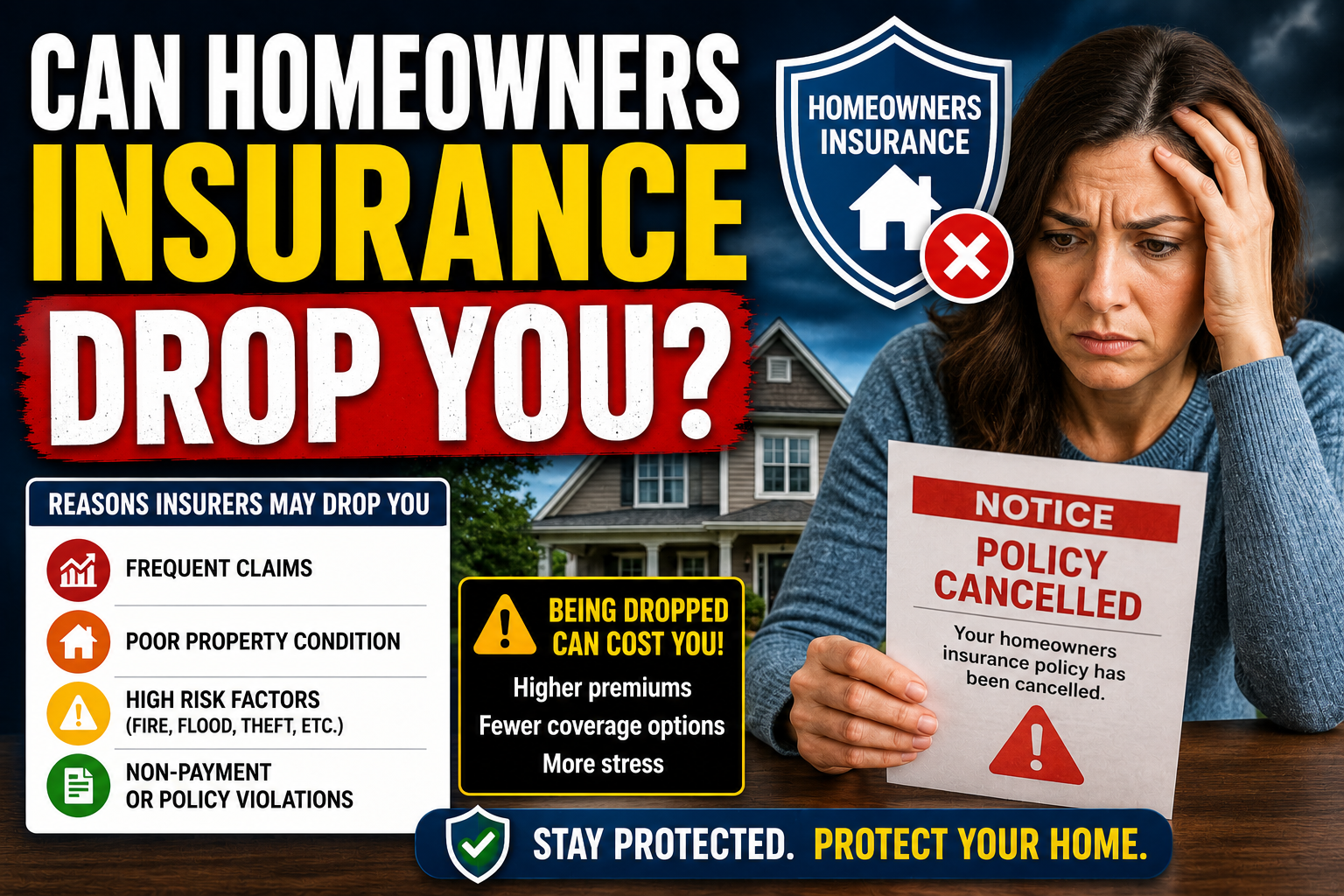
Yes, homeowners’ insurance companies can sometimes cancel, refuse to renew, or “drop” a policy under certain circumstances. Insurance companies regularly evaluate risk, claims history, property condition, and policy compliance when deciding whether to continue coverage.
Being dropped by a homeowner’s insurance company can make it harder and more expensive to find new coverage, especially if the property is considered high risk.
Understanding why insurers canc, el non-renewalnew policie, can help homeowners avoid coverage problems and maintain long-term insurance protection.
What Does “Dropped” Mean in Homeowners Insurance?
Homeowners often use the phrase “dropped” to describe two different situations:
Policy Cancellation
The insurance company terminates the policy before the renewal date.
Non-Renewal
The insurer chooses not to renew coverage when the policy period ends.
The rules for cancellations and non-renewals differ depending on:
- State laws
- Policy terms
- Timing of the decision
Why Would a Homeowners Insurance Company Drop Coverage?
Insurance companies may cancel or refuse renewal for several reasons.
Too Many Insurance Claims
Frequent claims are one of the most common reasons homeowners may lose coverage.
Claims involving:
- Water damage
- Liability incidents
- Theft
- Roof damage
- Mold
may increase risk concerns for insurers.
Multiple claims within a short period can make homeowners appear higher risk.
Property Maintenance Problems
Insurance companies expect homes to be maintained properly.
Common issues that may trigger concerns include:
- Old roofs
- Structural damage
- Unsafe electrical systems
- Plumbing problems
- Mold issues
- Fire hazards
Some insurers perform home inspections to evaluate risk conditions.
High-Risk Property Features
Certain property features may increase liability exposure.
Examples include:
- Trampolines
- Aggressive dog breeds
- Swimming pools
- Vacant homes
- Short-term rentals
Some insurers may increase premiums or decline renewal because of these risks.
Missed Insurance Payments
Failing to pay premiums on time may result in:
- Policy cancellation
- Coverage lapse
- Late fees
Most insurers provide grace periods, but continued nonpayment may lead to termination.
Fraud or Misrepresentation
Providing false information during applications or claims may result in cancellation.
Examples may include:
- Undisclosed property conditions
- False claims
- Incorrect occupancy information
- Hidden renovations or risks
Insurance fraud is taken seriously.
Living in High-Risk Disaster Areas
Homes located in areas with increased exposure to:
- Hurricanes
- Wildfires
- Flooding
- Severe storms
may face stricter underwriting standards.
In some high-risk regions, insurers reduce exposure by limiting renewals.
Can Insurance Companies Cancel Policies Anytime?
Usually no.
Most states have rules limiting when insurers can cancel policies.
Early Policy Period
During the first part of a policy term, insurers may have broader cancellation rights.
After Policies Mature
State laws often provide additional protections after a policy has been active for a certain period.
Rules vary significantly by state.
What Is a Non-Renewal Notice?
If an insurer decides not to renew coverage, homeowners typically receive advance notice.
The notice may explain:
- Why the policy will end
- When coverage expires
- Any appeal or correction options
Notification timelines vary by state law.
Can You Fight a Homeowners Insurance Cancellation?
Sometimes.
Homeowners may be able to:
- Correct property issues
- Provide documentation
- Appeal decisions
- Shop for alternative coverage
Responding quickly is important when receiving cancellation notices.
What Happens if You Lose Homeowners Insurance?
Losing coverage can create serious financial and mortgage problems.
Potential consequences include:
- Difficulty obtaining new coverage
- Higher insurance premiums
- Mortgage lender concerns
- Force-placed insurance
Mortgage lenders usually require continuous homeowners’ insurance coverage.
What Is Force-Placed Insurance?
If homeowners fail to maintain insurance, lenders may purchase:
- Force-placed insurance
Force-placed coverage is often:
- More expensive
- More limited
- Designed mainly to protect the lender
It may not fully protect homeowners’ belongings or liability risks.
How Claims History Affects Future Insurance
Insurance companies often review claims databases when evaluating applicants.
A history of:
- Frequent claims
- Large payouts
- Water damage losses
may affect:
- Premiums
- Eligibility
- Coverage options
Even previous claims by prior homeowners may sometimes appear in property history reports.
Tips to Avoid Being Dropped by Homeowners Insurance
Maintain the Property
Repair roofing, plumbing, and safety issues promptly.
Avoid Small Claims When Possible
Frequent minor claims may increase risk profiles.
Pay Premiums On Time
Late payments can jeopardise coverage.
Review Policy Requirements
Understand restrictions involving pets, rentals, or property features.
Update Safety Features
Modern electrical, plumbing, and security systems may improve insurability.
Can You Get Insurance After Being Dropped?
Usually yes, but coverage may become:
- More expensive
- Harder to find
- Limited through high-risk insurers
Shopping around and correcting risk issues may improve options over time.
Frequently Asked Questions
Can homeowners’ insurance cancel coverage after one claim?
Sometimes, depending on claim severity and insurer policies.
Will an old roof affect homeowners’ insurance?
Yes. Ageing roofs are a common underwriting concern.
Can missing payments cancel homeowners’ insurance?
Yes. Nonpayment is a common reason for cancellation.
What is the difference between cancellation and non-renewal?
Cancellation ends coverage during the policy term, while non-renewal ends it at renewal time.
Can homeowners’ insurance drop you for living in a wildfire area?
In some regions, insurers may limit or reduce coverage because of disaster risk exposure.
Editorial Note
This article is intended for educational and informational purposes only. Insurance cancellation rules, underwriting guidelines, consumer protections, and non-renewal laws vary by insurer and state regulations.
Disclaimer
This content does not constitute legal, financial, or insurance advice. Homeowners should review official policy documents and consult licensed insurance professionals or legal advisors regarding cancellation notices and insurance rights.
Final Thoughts
Homeowners insurance companies can sometimes cancel or refuse to renew policies when risks become too high or policy requirements are not met. Frequent claims, poor property maintenance, missed payments, and high-risk property conditions are among the most common reasons homeowners lose coverage. Maintaining the property carefully, understanding policy rules, and addressing issues early can help homeowners reduce the risk of being dropped by their insurance company.