Homeowners Insurance and Trusts
Placing a home into a trust is a common estate planning strategy used to simplify inheritance, protect assets, and manage property ownership. However, many homeowners do not realize that transferring a property into a trust can also affect homeowners’ insurance coverage.
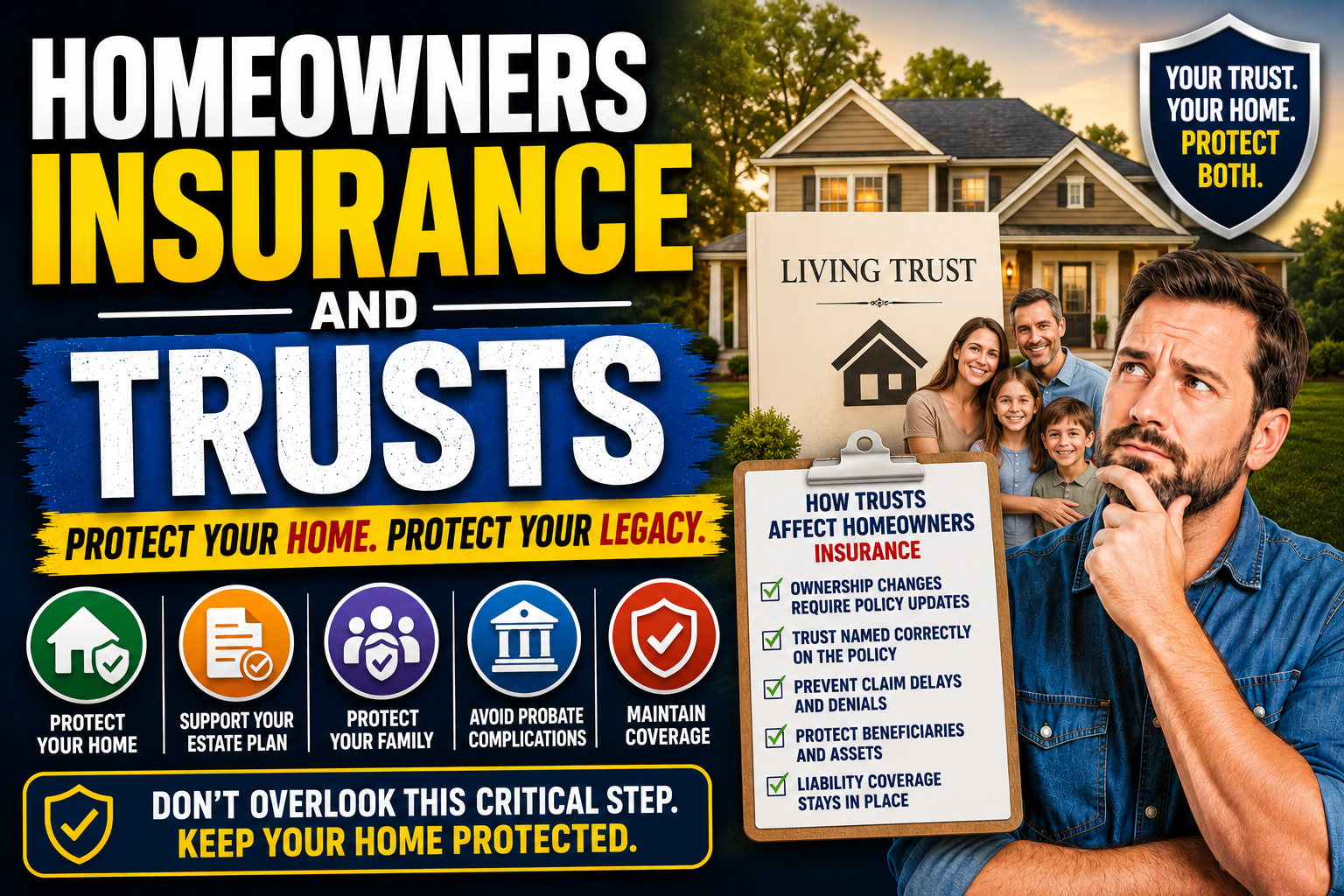
If insurance policies are not updated correctly after transferring a home into a trust, homeowners could face claim delays, denied coverage, or liability complications.
Understanding how homeowners’ insurance and trusts work together is essential for protecting both the property and the individuals connected to the trust.
What Is a Trust?
A trust is a legal arrangement where assets are managed by one party for the benefit of another.
A trust typically involves:
- A grantor (the person creating the trust)
- A trustee (the person managing the trust)
- Beneficiaries (the people receiving benefits)
Homes and real estate are commonly transferred into trusts as part of estate planning.
Why Homeowners Put Property Into a Trust
Homeowners may place property into a trust for several reasons.
Common Benefits Include:
- Avoiding probate
- Simplifying inheritance
- Protecting privacy
- Managing assets for family members
- Estate planning efficiency
- Long-term asset management
Trust ownership can help families transfer property more smoothly after death.
Does Putting a Home Into a Trust Affect Insurance?
Yes.
When property ownership changes from an individual to a trust, homeowners’ insurance policies often need updating to reflect the new ownership structure.
If policies are not updated properly:
- Claims may become complicated
- Liability issues may arise
- Coverage disputes may occur
Insurance companies generally need accurate ownership information.
Should the Trust Be Named on the Insurance Policy?
In many cases, yes.
Homeowners’ insurance policy should usually reflect:
- The trust is an additional insured or named insured
- The trustee’s role
- Proper legal ownership details
Exact wording depends on:
- State laws
- Insurance company requirements
- Trust structure
Homeowners should work with their insurer to ensure policies are updated correctly.
What Happens if Insurance Is Not Updated?
Failing to notify the insurance company after transferring a home into a trust may create serious problems.
Possible Risks Include:
- Claim delays
- Coverage disputes
- Policy cancellation
- Denied liability claims
- Ownership confusion during claims
Insurance companies expect policy information to match legal property ownership records.
Types of Trusts and Insurance Considerations
Different trust structures may affect insurance differently.
Revocable Living Trusts
Revocable living trusts are among the most common estate planning tools.
The grantor usually:
- Maintains control of assets
- Lives in the property
- Can modify the trust
Insurance updates are generally simpler with revocable trusts.
Irrevocable Trusts
Irrevocable trusts involve more permanent ownership changes.
These trusts may:
- Require specialized insurance structures
- Create additional liability considerations
- Affect property control rights
Professional legal and insurance guidance is often recommended.
Liability Coverage and Trust-Owned Homes
Liability protection remains extremely important for homes held in trusts.
Liability coverage may help protect against:
- Injury lawsuits
- Property damage claims
- Legal expenses
- Medical costs
If ownership structures are not listed correctly, liability coverage complications may occur.
Can a Trust Affect Mortgage Requirements?
Sometimes.
Mortgage lenders may have specific rules regarding:
- Property transfers into trusts
- Insurance policy wording
- Escrow arrangements
Homeowners should notify both:
- Their lender
- Their insurance company
When placing property into a trust.
Vacation Homes and Rental Properties in Trusts
Trust-owned vacation homes or rental properties may require:
- Different policy types
- Landlord insurance
- Additional liability protection
Standard homeowners insurance may not fully cover rental-related risks.
Umbrella Insurance and Trusts
Some homeowners with trusts purchase umbrella insurance for additional liability protection.
Umbrella policies may provide:
- Higher liability limits
- Extended legal protection
- Additional lawsuit coverage
This may be especially important for:
- High-value properties
- Multiple properties
- Rental investments
Important Insurance Documents to Review
When placing property into a trust, homeowners should review:
- Homeowners insurance policy
- Declarations page
- Trust documentation
- Mortgage agreements
- Liability limits
- Named insured details
Accurate documentation helps reduce future disputes.
Common Mistakes Homeowners Make
Not Informing the Insurance Company
Ownership changes should always be disclosed.
Assuming Coverage Automatically Transfers
Insurance policies may not automatically adjust after trust transfers.
Ignoring Liability Risks
Trust-owned properties still require proper liability protection.
Forgetting Additional Properties
Vacation homes and rentals may need separate updates.
Failing to Review Policies Regularly
Estate plans and insurance coverage should be reviewed periodically.
Tips for Managing Homeowners Insurance With Trusts
Notify Your Insurer Immediately
Inform the insurance company after property transfers.
Work With Estate Planning Professionals
Legal and insurance coordination is important.
Confirm Named Insured Information
Ensure the trust and trustees are listed properly.
Review Liability Coverage
Higher liability limits may provide stronger protection.
Keep Records Updated
Maintain copies of trust documents and policy updates.
Frequently Asked Questions
Can I keep my existing homeowners’ insurance after placing my home in a trust?
Often yes, but the policy may need to be updated to reflect trust ownership.
Will a trust increase homeowners’ insurance costs?
Not necessarily. Premium changes depend more on property risks and coverage details.
Should the trustee be listed on the insurance policy?
In many cases, yes. Exact requirements vary by insurer and trust structure.
Can claims be denied if the trust is not listed?
Potentially. Ownership discrepancies may create claim complications.
Does a trust replace the need for homeowners’ insurance?
No. A trust does not provide property or liability insurance protection.
Editorial Note
This article is intended for educational and informational purposes only. Trust laws, insurance requirements, estate planning rules, and liability protections vary by state, insurer, and legal structure.
Disclaimer
This content does not constitute legal, estate planning, financial, or insurance advice. Homeowners should consult qualified attorneys, financial professionals, and licensed insurance agents regarding trusts and homeowners’ insurance coverage.
Final Thoughts
Trusts can be valuable estate planning tools, but homeowners should never overlook the insurance implications of transferring property ownership. Updating homeowners’ insurance properly after placing a home into a trust helps protect the property, reduce liability risks, and avoid unnecessary claim complications in the future.