
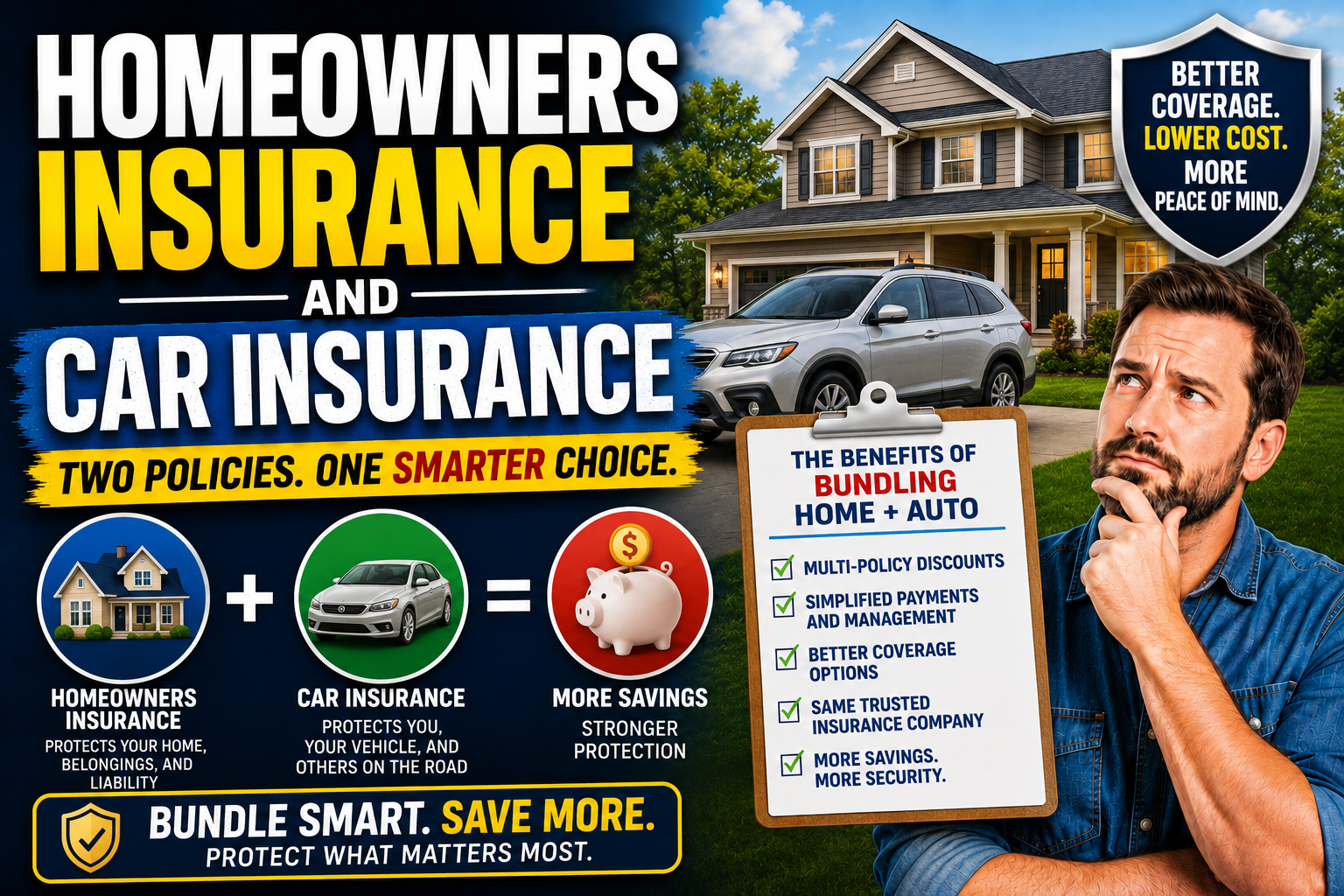
Homeowners Insurance and Car Insurance
Homeowners insurance and car insurance are two of the most important types of personal insurance coverage. While they protect different things, many insurance companies encourage customers to combine both policies through bundling discounts and multi-policy savings.
Understanding how homeowners’ insurance and car insurance work together can help homeowners and drivers reduce costs, improve coverage, and simplify insurance management.
Whether you own a home, drive a vehicle, or both, knowing the differences and connections between these policies is essential for long-term financial protection.
What Is Homeowners Insurance?
Homeowners insurance helps protect a home and personal belongings against covered risks such as:
- Fire
- Storm damage
- Theft
- Vandalism
- Certain water damage
- Liability claims
A standard homeowners insurance policy may include:
- Dwelling coverage
- Personal property protection
- Liability coverage
- Additional living expenses
- Detached structure coverage
Homeowners’ insurance primarily focuses on protecting property and liability risks related to the home.
What Is Car Insurance?
Car insurance helps protect drivers financially after accidents, vehicle damage, theft, or liability claims involving automobiles.
Auto insurance may include:
- Liability coverage
- Collision coverage
- Comprehensive coverage
- Uninsured motorist coverage
- Medical payments coverage
Car insurance focuses on vehicle-related financial protection and legal responsibility.
Key Differences Between Homeowners and Car Insurance
Although both are insurance products, they cover different risks.
Homeowners Insurance Covers:
- Homes
- Personal belongings
- Property liability
- Structural damage
Car Insurance Covers:
- Vehicles
- Driving-related accidents
- Auto liability
- Vehicle repairs
The policies work separately but may complement each other financially.
Why Insurance Companies Offer Bundling
Bundling means purchasing multiple insurance policies from the same insurance company.
The most common bundle combines:
- Homeowners insurance
- Auto insurance
Insurance companies encourage bundling because:
- It increases customer retention
- Simplifies account management
- Reduces administrative costs
In return, customers may receive discounts.
Benefits of Bundling Home and Auto Insurance
Lower Insurance Premiums
Many insurers offer discounts for combining policies.
Simplified Billing
One company may handle:
- Payments
- Claims
- Renewals
- Customer service
Easier Policy Management
Managing multiple policies in one account may be more convenient.
Potential Loyalty Discounts
Long-term bundled customers sometimes qualify for additional savings.
How Much Can Bundling Save?
Savings vary depending on:
- Insurance company
- State
- Property value
- Vehicle type
- Driving history
- Claims history
Some homeowners may save:
- 5%
- 10%
- 15%
Or more by bundling policies.
Actual savings differ by provider.
Does Bundling Always Save Money?
Not always.
While bundling often lowers costs, homeowners should still compare:
- Coverage limits
- Deductibles
- Policy exclusions
- Claim service quality
Sometimes, separate insurers may offer better overall pricing or coverage.
Liability Coverage in Both Policies
Both homeowners’ insurance and auto insurance include liability protection.
Homeowners Liability Coverage
May help cover:
- Injuries on your property
- Legal fees
- Property damage claims
Auto Liability Coverage
May help cover:
- Vehicle accident injuries
- Damage to other vehicles
- Legal expenses
Liability coverage helps protect against expensive lawsuits and claims.
What Homeowners Insurance Does NOT Cover for Cars
Many homeowners mistakenly believe that homeowners’ insurance protects vehicles parked at home.
Generally, homeowners’ insurance does not cover:
- Vehicle collisions
- Auto theft damage
- Car accident repairs
Vehicle-related claims are usually handled through auto insurance policies.
What Homeowners Insurance May Cover Related to Vehicles
In some cases, homeowners’ insurance may cover:
- Personal belongings were stolen from a car
- Damage to detached structures caused by a vehicle
- Liability incidents occurring on the property
Coverage depends on policy details and claim circumstances.
How Claims Affect Both Policies
Insurance companies often review overall claims history.
Frequent claims on either:
- Homeowners insurance
or - Auto insurance
may impact:
- Premiums
- Eligibility
- Renewal decisions
Maintaining a clean claims history can help reduce long-term costs.
Factors That Affect Home and Auto Insurance Rates
Insurance companies evaluate several risk factors.
Homeowners Insurance Factors
- Home location
- Roof condition
- Rebuilding cost
- Claims history
- Credit-based insurance score
Auto Insurance Factors
- Driving history
- Vehicle type
- Mileage
- Accident history
- Driver age
Every insurer uses different pricing models.
Ways to Save on Homeowners and Car Insurance
Bundle Policies
Bundling may reduce premiums.
Increase Deductibles
Higher deductibles often lower monthly costs.
Improve Credit
Insurance scores may affect pricing in many states.
Install Safety Features
Security systems and anti-theft devices may qualify for discounts.
Compare Multiple Quotes
Shopping around regularly may help identify better rates.
Umbrella Insurance for Extra Protection
Some homeowners purchase umbrella insurance to extend liability coverage beyond standard limits.
Umbrella policies may provide:
- Additional lawsuit protection
- Higher liability limits
- Broader financial protection
This can help homeowners with:
- High-value assets
- Multiple properties
- Increased liability exposure
Frequently Asked Questions
Can I bundle homeowners and car insurance together?
Yes. Many insurance companies offer bundled home and auto insurance packages.
Does bundling guarantee lower rates?
Not always. Comparing multiple insurers is still important.
Will homeowners’ insurance cover my car in the garage?
Generally no. Vehicle damage is usually covered under auto insurance.
Can one claim affect both policies?
Potentially. Insurance companies may consider the overall claims history.
Is it easier to manage bundled policies?
For many homeowners, yes. Bundling may simplify billing and account management.
Editorial Note
This article is intended for educational and informational purposes only. Insurance coverage, discounts, eligibility, and policy terms vary by insurer, state regulations, and underwriting guidelines.
Disclaimer
This content does not constitute financial, legal, or insurance advice. Homeowners and drivers should review official policy documents and consult licensed insurance professionals before purchasing or modifying insurance coverage.
Final Thoughts
Homeowners insurance and car insurance provide different types of financial protection, but together they help create a stronger overall safety net for homeowners and drivers. Understanding how these policies work, how bundling affects pricing, and how liability coverage applies can help consumers make smarter insurance decisions and potentially save money over time.