Homeowners Insurance and Roof Replacement
Roof replacement is one of the most expensive home repair projects homeowners may face. Depending on the size, material, and location of the property, replacing a roof can cost thousands or even tens of thousands of dollars. Because of these costs, many homeowners wonder whether their homeowners’ insurance policy will help cover roof damage or a full roof replacement.
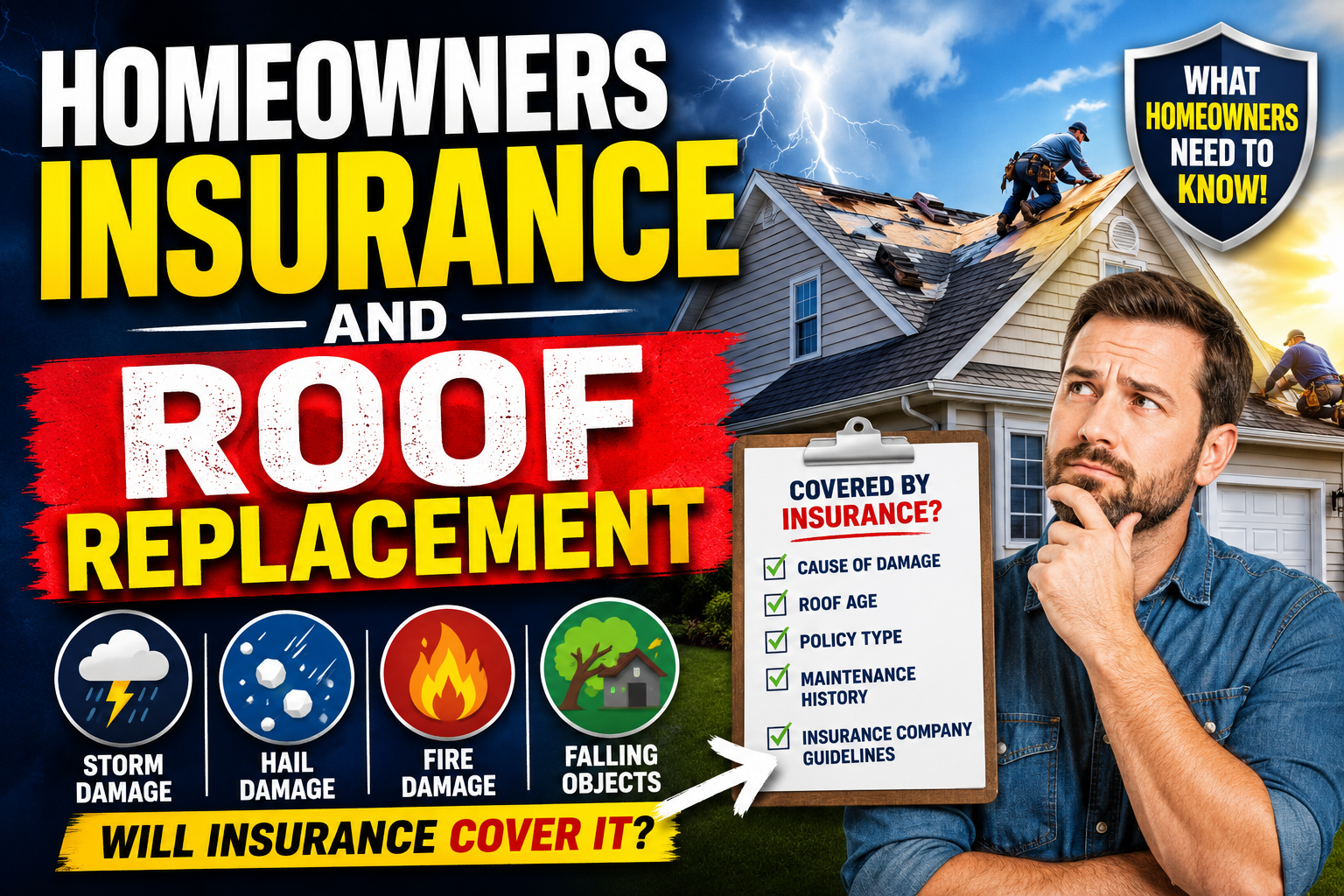
In many situations, homeowners’ insurance may cover roof replacement if the damage is caused by a covered event such as storms, hail, fire, or falling objects. However, coverage depends on several important factors, including the cause of damage, roof age, policy type, maintenance history, and insurance company guidelines.
Understanding how homeowners’ insurance handles roof replacement can help homeowners avoid unexpected expenses and make smarter insurance decisions.
Does Homeowners Insurance Cover Roof Replacement?
In many cases, yes, homeowners’ insurance may help pay for roof repairs or full replacement when damage results from a covered peril.
Common Covered Causes of Roof Damage
Most standard homeowners’ insurance policies may cover roof damage caused by:
- Windstorms
- Hail
- Fire
- Lightning
- Falling trees
- Falling debris
- Certain storm damage
- Vandalism
If the damage is sudden and accidental, insurance companies are more likely to approve coverage.
When Roof Replacement Is Usually Covered
Insurance companies typically cover roof replacement when:
- The damage occurred suddenly
- The cause is covered under the policy
- The roof was properly maintained
- The homeowner files the claim promptly
- The roof was in reasonably good condition before the event
Example
If a severe hailstorm damages shingles and creates leaks throughout the roof, homeowners’ insurance may help pay for repairs or replacement,t depending on the policy.
When Roof Replacement Is Usually NOT Covered
There are several situations where homeowners’ insurance may deny roof replacement claims.
Common Exclusions Include:
- Normal wear and tear
- Old age deterioration
- Neglected maintenance
- Mold caused by long-term leaks
- Pest or insect damage
- Improper installation
- Cosmetic-only damage
Insurance policies are designed to cover sudden accidental damage — not aging or maintenance issues.
Roof Age and Insurance Coverage
Roof age is one of the biggest factors insurance companies consider during claims and policy renewals.
Newer Roofs
Newer roofs often qualify for:
- Better coverage
- Lower premiums
- Full replacement cost coverage
Older Roofs
Older roofs may:
- Receive limited coverage
- Be insured at actual cash value
- Face claim restrictions
- Increase insurance premiums
Some insurers may refuse coverage for roofs beyond a certain age threshold.
Replacement Cost vs Actual Cash Value
Roof claims are often paid using one of two methods.
Replacement Cost Value (RCV)
Replacement cost coverage may pay the cost of replacing the roof using current material and labor prices without subtracting depreciation.
This usually provides larger claim payouts.
Example
A damaged roof costing $18,000 to replace may be covered close to full value minus the deductible.
Actual Cash Value (ACV)
Actual cash value policies subtract depreciation based on roof age and condition.
Older roofs often receive smaller payouts.
Example
A 20-year-old roof may only receive partial reimbursement because of depreciation.
How Deductibles Affect Roof Claims
A deductible is the amount homeowners pay before insurance coverage begins.
Example
- Roof replacement cost: $15,000
- Deductible: $2,000
Insurance may pay approximately:
- $13,000
Higher deductibles usually lower insurance premiums but increase out-of-pocket costs during claims.
Wind and Hail Deductibles
Some states have separate deductibles for:
- Hurricanes
- Windstorms
- Hail damage
These deductibles are often percentage-based rather than fixed dollar amounts.
Example
A 2% hurricane deductible on a $400,000 home equals:
- $8,000 deductible
This can significantly affect roof claim payouts.
Signs Your Roof May Need Replacement
Homeowners should watch for:
- Missing shingles
- Curling shingles
- Granule loss
- Water stains on ceilings
- Sagging roof areas
- Frequent leaks
- Mold growth
- Storm damage
Prompt inspections may help prevent larger insurance issues later.
How to File a Roof Insurance Claim
Step 1: Document the Damage
Take clear photos and videos immediately after damage occurs.
Step 2: Prevent Further Damage
Temporary repairs may help reduce additional losses.
Step 3: Contact Your Insurance Company
Report the damage as soon as possible.
Step 4: Schedule an Inspection
An insurance adjuster may inspect the roof to evaluate damage.
Step 5: Review the Settlement
Understand whether the payout uses replacement cost or actual cash value.
Tips for Improving Roof Insurance Claims
Maintain Your Roof Regularly
Proper maintenance improves claim approval chances.
Keep Inspection Records
Roof inspection reports may support your claim.
Replace Aging Roofs Early
Older roofs may lose coverage eligibility.
Understand Your Policy
Review deductibles, exclusions, and payout methods carefully.
Work With Licensed Contractors
Professional estimates may help support claim accuracy.
How Roof Condition Affects Insurance Premiums
Insurance companies often charge higher premiums for:
- Older roofs
- Damaged roofs
- High-risk materials
- Poor maintenance history
New roofs may qualify for discounts because they reduce claim risk.
Roof Materials and Insurance
Different roofing materials affect insurance costs differently.
Asphalt Shingles
Most common and generally affordable to insure.
Metal Roofs
May offer durability discounts in some regions.
Tile Roofs
Durable but expensive to replace.
Impact-Resistant Roofs
May qualify for storm-resistant discounts.
Does Insurance Cover Roof Leaks?
Sometimes.
Insurance may cover roof leaks if caused by sudden covered damage,ge such as:
- Storm damage
- Fallen trees
- Hail impact
Leaks caused by neglected maintenance are usually excluded.
Frequently Asked Questions
Will homeowners’ insurance pay for a full roof replacement?
Possibly, if the roof was damaged by a covered event and meets policy requirements.
Does insurance cover old roofs?
Coverage may be limited for older roofs depending on policy type and roof condition.
What if my roof claim is denied?
Homeowners may request a second inspection or review policy details with their insurer.
Are roof inspections required for insurance?
Some insurers require inspections before issuing or renewing policies.
Can a new roof lower insurance premiums?
In many cases, yes. New roofs may reduce risk and qualify for discounts.
Editorial Note
This article is intended for educational and informational purposes only. Insurance coverage, roof claim eligibility, deductibles, and settlement methods vary by insurer, property condition, policy terms, and local regulations.
Disclaimer
This content does not constitute legal, insurance, or financial advice. Homeowners should review official insurance policy documents and consult licensed insurance professionals regarding roof replacement coverage and claim eligibility.
Final Thoughts
Homeowners’ insurance may help cover roof replacement costs when damage is caused by covered events such as storms, hail, or fire. However, coverage depends heavily on roof condition, policy terms, deductibles, and maintenance history. Understanding how roof claims work can help homeowners better protect their property, avoid costly surprises, and make informed insurance decisions.