What Insurance Covers Zepbound? A Complete Guide to Coverage, Costs, and Eligibility
Zepbound has become a widely discussed prescription medication for chronic weight management, but one of the biggest concerns for many people is the cost.
A common question is:
What insurance covers Zepbound?
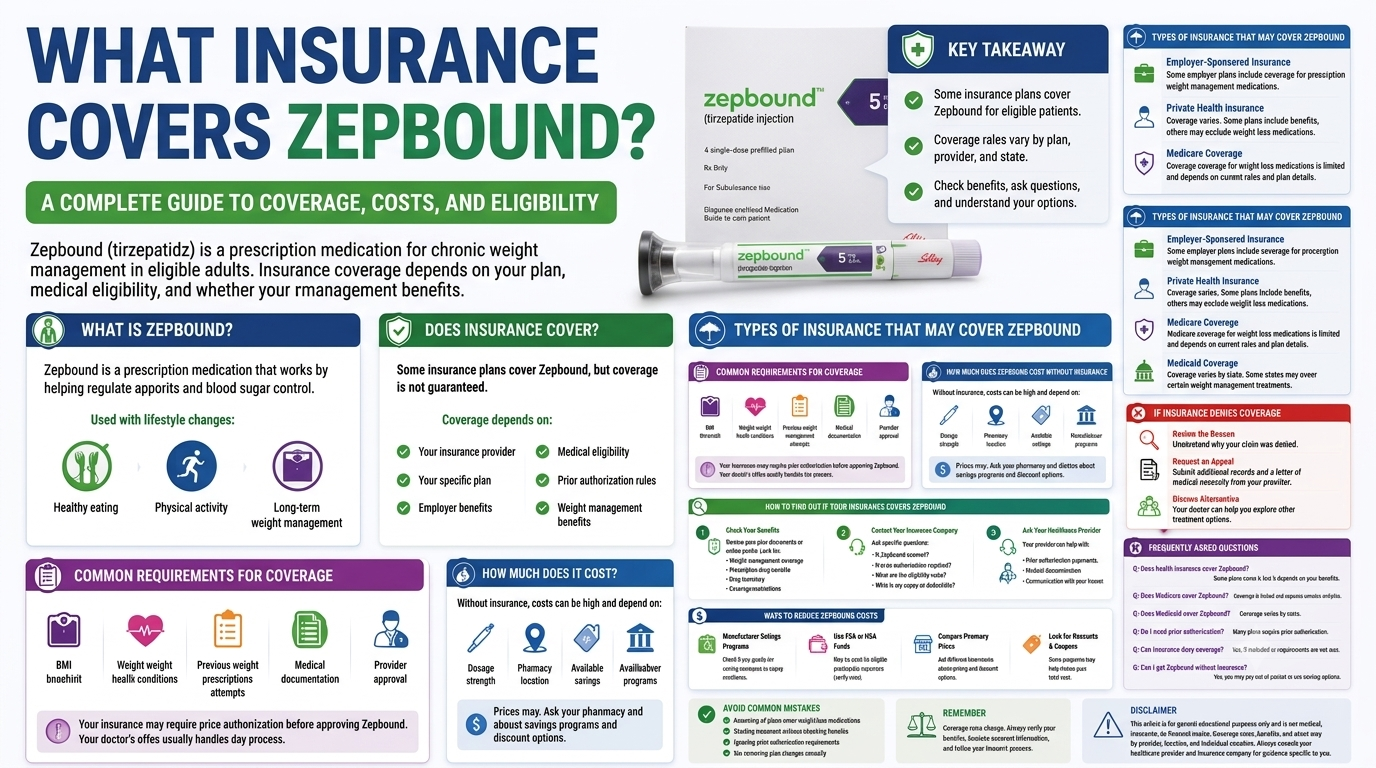
The answer depends on your health insurance plan, your medical eligibility, whether your employer includes weight management benefits, and whether your insurance company requires prior authorization.
Some insurance plans may cover Zepbound for eligible patients, while others exclude weight loss medications or require patients to meet specific conditions before approving coverage.
Understanding how insurance coverage works can help you know what questions to ask, what costs to expect, and what options may be available if your plan does not cover the medication.
What Is Zepbound?
Zepbound (tirzepatide) is a prescription medication developed for chronic weight management in eligible adults. It belongs to a class of medications that work by affecting hormones involved in appetite regulation and blood sugar control.
Healthcare providers may prescribe Zepbound along with lifestyle changes, including:
- Healthy eating habits
- Increased physical activity
- Long-term weight management strategies
Zepbound is not intended as a quick solution for short-term weight loss. A healthcare professional evaluates whether it is appropriate based on a person’s health history and treatment goals.
Does Insurance Cover Zepbound?
Some insurance plans cover Zepbound, but coverage is not guaranteed.
Insurance coverage depends on several factors:
- Your insurance provider
- Your specific health plan
- Employer benefits
- Medical eligibility requirements
- Prior authorization rules
- Whether weight management medications are included
Many health insurance plans treat weight loss medications differently from medications used for other medical conditions.
A plan may cover Zepbound for one person but deny coverage for another person under a different policy.
What Types of Insurance May Cover Zepbound?
Different insurance programs have different coverage rules.
Employer-Sponsored Health Insurance
Some employer health plans include coverage for prescription weight management medications.
Coverage depends on the benefits selected by the employer.
Your plan may require:
- A diagnosis that meets eligibility criteria
- Documentation from your healthcare provider
- Prior authorization approval
- Participation in a weight management program
Check your employee benefits portal or contact your insurance provider for exact details.
Private Health Insurance Plans
Individual health insurance plans may or may not cover Zepbound.
Some plans include weight management medication benefits, while others exclude them.
Before starting treatment, review:
- Prescription drug coverage
- Medication exclusions
- Specialty pharmacy requirements
- Coverage limitations
Medicare Coverage
Medicare coverage for weight loss medications can be limited and depends on current rules, approved uses, and plan details.
Some Medicare plans may cover certain medications when prescribed for approved medical conditions, but coverage policies can change.
Patients should confirm directly with their Medicare plan provider.
Medicaid Coverage
Medicaid coverage for Zepbound varies by state.
Some state Medicaid programs may cover certain weight management treatments, while others may have restrictions or exclusions.
Eligibility requirements and approval processes differ.
Why Do Insurance Companies Require Prior Authorization for Zepbound?
Many insurance companies require prior authorization before approving Zepbound.
Prior authorization means your healthcare provider must submit information showing that the medication meets the insurer’s requirements.
The insurance company may review:
- Your medical history
- Weight-related health conditions
- Previous treatments
- Clinical information from your provider
Approval requirements vary between insurance companies.
What Are Common Requirements for Zepbound Coverage?
Insurance companies may require patients to meet certain criteria before approving coverage.
Requirements may include:
- A specific body mass index (BMI) threshold
- Weight-related health conditions
- Previous attempts at weight management
- Medical documentation
- Provider approval
Your doctor’s office usually handles the prior authorization process, but approval decisions are made by the insurance company.
How Much Does Zepbound Cost Without Insurance?
Without insurance coverage, prescription medication costs can be high.
The actual price depends on factors such as:
- Pharmacy location
- Dosage
- Available savings programs
- Manufacturer discounts
- Insurance status
Patients should discuss pricing options with their healthcare provider and pharmacy.
Do not assume the retail price is the final amount you will pay because discounts, coverage programs, or assistance options may affect the cost.
How to Find Out If Your Insurance Covers Zepbound
Follow these steps before starting treatment.
Check Your Prescription Benefits
Review your insurance plan documents or online portal.
Look for:
- Weight management medication coverage
- Pharmacy benefits
- Drug formularies
- Coverage restrictions
Contact Your Insurance Company
Ask specific questions:
- Is Zepbound covered under my plan?
- Is prior authorization required?
- What are the eligibility requirements?
- Is there a copay or deductible?
- Is Zepbound considered a covered medication?
Ask Your Healthcare Provider
Your doctor’s office may help determine whether you meet coverage requirements.
They may assist with:
- Prior authorization paperwork
- Medical documentation
- Communication with your insurer
What If Insurance Denies Zepbound Coverage?
A denial does not always mean there are no options.
If your request is denied, you can:
Review the Reason for Denial
Insurance companies usually explain.
Common reasons include:
- Medication exclusion
- Missing documentation
- Not meeting eligibility requirements
- Plan limitations
Request an Appeal
Many insurance plans allow patients and providers to appeal coverage decisions.
An appeal may include:
- Additional medical records
- Supporting information from your healthcare provider
- Explanation of medical necessity
Discuss Alternatives With Your Doctor
Your healthcare provider may discuss other treatment options that fit your health needs and insurance coverage.
Ways to Reduce Zepbound Costs
If your insurance does not cover Zepbound, possible options may include:
Manufacturer Savings Programs
Some prescription manufacturers offer savings programs for eligible patients.
Eligibility rules vary, and not everyone qualifies.
Flexible Spending Accounts (FSA) or Health Savings Accounts (HSA)
Some healthcare expenses may qualify for HSA or FSA payments depending on account rules and applicable regulations.
Compare Pharmacy Prices
Medication prices can vary between pharmacies.
Ask your pharmacy about available pricing options.
Common Mistakes People Make About Zepbound Insurance Coverage
Assuming All Insurance Plans Cover Weight Loss Medications
Many people assume prescription coverage automatically includes every medication. Weight management medications often have separate rules.
Starting Treatment Without Checking Benefits
Before filling a prescription, confirm whether your insurance requires approval.
Ignoring Prior Authorization Requirements
A prescription alone does not always mean insurance will pay. Approval may be required first.
Not Reviewing Plan Changes
Insurance benefits can change annually. A medication covered this year may have different rules later.
Frequently Asked Questions About Zepbound Insurance Coverage
Does health insurance cover Zepbound?
Some health insurance plans cover Zepbound, but coverage depends on your plan benefits, eligibility requirements, and insurance rules.
Does Medicare cover Zepbound?
Medicare coverage depends on current regulations, approved uses, and individual plan policies. Check directly with your Medicare provider.
Does Medicaid cover Zepbound?
Medicaid coverage varies by state. Some programs may provide coverage while others may have restrictions.
Do I need prior authorization for Zepbound?
Many insurance plans require prior authorization before covering Zepbound.
Can my insurance deny Zepbound coverage?
Yes, an insurance company may deny coverage if the medication is excluded, requirements are not met, or approval criteria are not satisfied.
Can I get Zepbound without insurance?
Some patients may pay out of pocket or explore available savings options, depending on eligibility.
Understanding Zepbound Insurance Coverage
So, what insurance covers Zepbound?
There is no single insurance plan that guarantees coverage for everyone. Coverage depends on your health plan, eligibility, medical information, and insurance requirements.
Before starting treatment:
- Review your prescription benefits
- Ask your insurer about Zepbound coverage
- Confirm prior authorization requirements
- Discuss costs and alternatives with your healthcare provider
Taking these steps can help you understand your options and avoid unexpected expenses.
Disclaimer
The information provided in this article is for general educational purposes only and should not be considered medical, insurance, or financial advice.
Medication coverage rules, insurance benefits, eligibility requirements, and costs vary by insurance provider, location, and individual circumstances. Always consult your healthcare provider and insurance company for guidance specific to your situation.
This article does not guarantee insurance approval, coverage availability, or treatment results.