
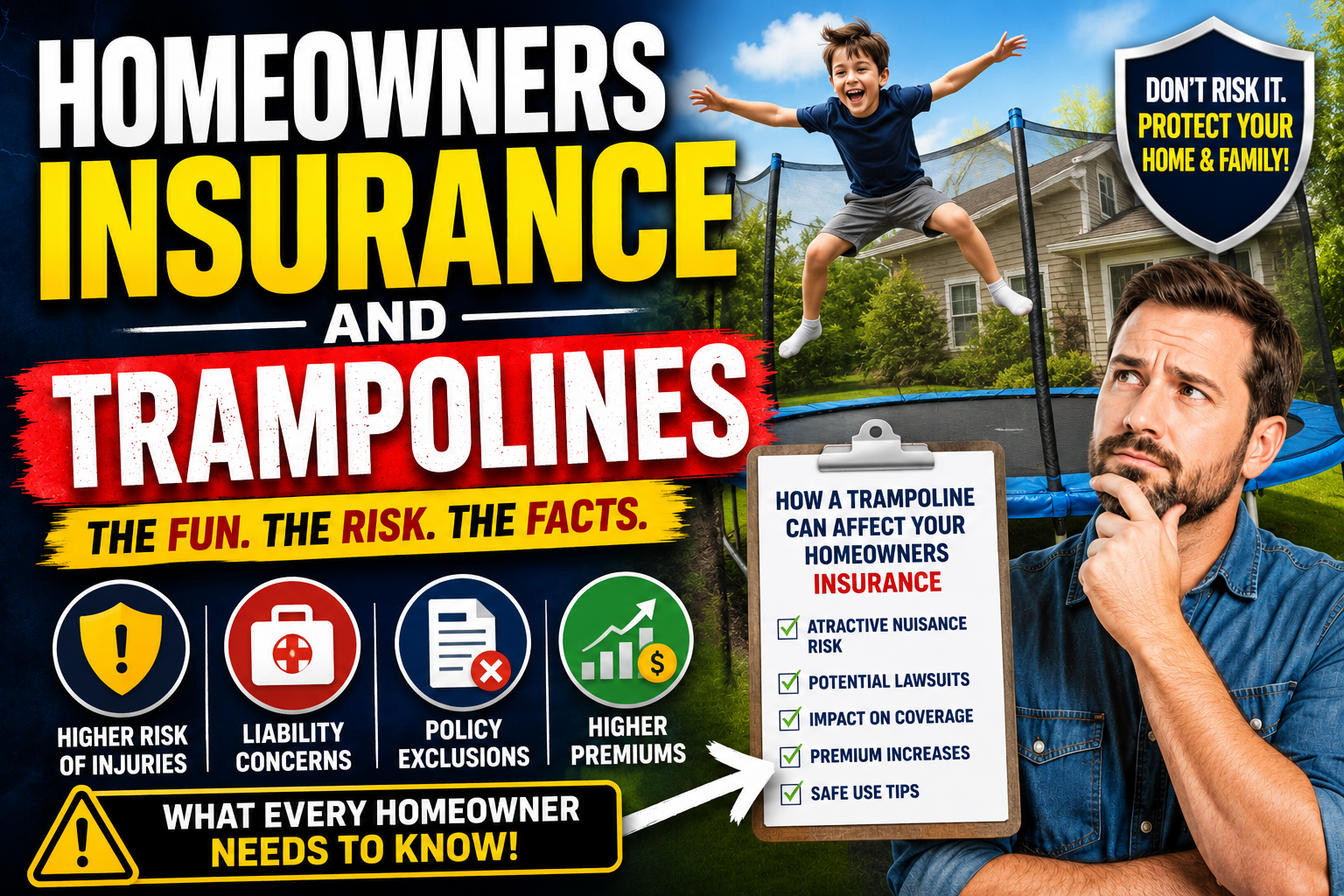
Homeowners Insurance and Trampolines
Trampolines are popular backyard features for families and children, but they also create significant insurance and liability concerns for homeowners. Because trampolines are associated with a higher risk of injuries, many insurance companies treat them as an “attractive nuisance,” meaning they may increase the likelihood of accidents and lawsuits.
Before purchasing a trampoline, homeowners should understand how it can affect homeowners’ insurance coverage, premiums, liability protection, and policy eligibility.
Does Homeowners Insurance Cover Trampolines?
In many cases, homeowners’ insurance may provide some liability coverage for trampoline-related injuries, but coverage depends heavily on the insurance company and policy terms.
Some insurers:
- Allow trampolines with restrictions
- Require specific safety features
- Increase premiums
- Exclude trampoline claims entirely
- Refuse coverage for homes with trampolines
Insurance rules vary widely between providers.
Why Insurance Companies Consider Trampolines Risky
Trampolines increase the chance of:
- Falls
- Broken bones
- Head injuries
- Neck injuries
- Lawsuits
- Emergency medical claims
Because injury claims can become expensive, insurers often classify trampolines as high-risk property features.
What Is an Attractive Nuisance?
An attractive nuisance is a feature on a property that may attract children and increase injury risk.
Common examples include:
- Trampolines
- Swimming pools
- Treehouses
- Skate ramps
Homeowners may still be held legally responsible for injuries even if someone enters the property without permission.
How Trampolines Affect Homeowners Insurance
A trampoline may affect homeowners’ insurance in several ways.
Higher Insurance Premiums
Some insurers charge higher premiums because trampolines increase liability risk.
Liability Restrictions
Policies may limit coverage amounts for trampoline-related claims.
Coverage Exclusions
Certain insurers specifically exclude trampoline injuries from liability coverage.
Policy Non-Renewal
Some insurance companies may refuse to renew policies if a trampoline is installed.
Liability Coverage and Trampoline Injuries
Liability coverage may help pay for:
- Medical expenses
- Legal fees
- Court costs
- Injury settlements
Example
If a neighborhood child is injured while using your trampoline, homeowners’ liability insurance may help cover resulting legal or medical costs — if trampoline claims are not excluded.
Common Trampoline Insurance Restrictions
Insurance companies often require:
- Safety nets
- Locked fences
- Adult supervision
- Proper installation
- Ground anchoring systems
Failing to follow safety requirements could impact claim approval.
Safety Features That May Help
Safety Enclosure Nets
Nets help reduce falls from the trampoline.
Protective Padding
Padding covers springs and metal frames.
Secure Fencing
Fenced yards may reduce unauthorized access.
Ground Anchors
Anchors help stabilize trampolines during storms or strong winds.
Weight and User Limits
Following manufacturer guidelines may reduce injury risk.
Does Homeowners Insurance Cover Trampoline Damage?
Coverage for trampoline damage itself depends on the cause.
Covered Situations May Include:
- Storm damage
- Wind damage
- Fire damage
- Falling tree damage
Common Exclusions May Include:
- Wear and tear
- Rust
- Poor maintenance
- Manufacturer defects
Policy details vary by insurer.
Can a Trampoline Void Homeowners Insurance?
In some cases, yes.
Certain insurance companies may:
- Decline coverage
- Cancel policies
- Refuse renewals
- Exclude trampoline liability claims
Homeowners should always notify their insurer before installing a trampoline.
Should You Tell Your Insurance Company About a Trampoline?
Yes.
Failing to disclose a trampoline may create problems during claims or policy renewals.
Insurance companies may deny claims if:
- The trampoline was undisclosed
- Safety requirements were ignored
- Policy terms were violated
Being transparent with your insurer is important.
How to Reduce Insurance Risks With a Trampoline
Install Safety Equipment
Use nets, padding, and secure anchors.
Restrict Access
Keep gates locked when the trampoline is not in use.
Supervise Children
Adult supervision reduces accident risk.
Follow Manufacturer Instructions
Improper installation increases liability exposure.
Review Insurance Coverage Regularly
Confirm that trampoline-related claims are covered.
Trampoline Rules May Differ by Insurance Company
Every insurance provider has different underwriting guidelines.
Some insurers:
- Allow small recreational trampolines
- Exclude large backyard trampolines
- Require fencing
- Require umbrella liability coverage
Shopping around may help homeowners find more flexible coverage options.
Umbrella Insurance and Trampolines
Some homeowners purchase umbrella insurance for additional liability protection.
Umbrella policies may provide:
- Higher liability limits
- Extra legal protection
- Additional lawsuit coverage
This can be helpful for homeowners with higher-risk property features.
Frequently Asked Questions
Will homeowners’ insurance cover trampoline injuries?
Possibly. Coverage depends on policy terms and whether trampoline claims are excluded.
Do trampolines increase homeowners’ insurance premiums?
In many cases, yes. Trampolines are considered higher-risk property features.
Can insurance companies deny coverage because of a trampoline?
Yes. Some insurers may refuse coverage or exclude trampoline-related claims.
Are safety nets required?
Many insurance companies recommend or require safety nets and fencing.
Should I remove my trampoline before switching insurance companies?
Some insurers may ask about trampolines during underwriting, so removing them could affect eligibility options.
Editorial Note
This article is intended for educational and informational purposes only. Insurance rules, exclusions, liability limits, and trampoline requirements vary by insurer, policy type, and state regulations.
Disclaimer
This content does not constitute legal, insurance, or financial advice. Homeowners should review official policy documents and consult licensed insurance professionals regarding trampoline-related coverage and liability risks.
Final Thoughts
Trampolines can provide fun and recreation for families, but they also introduce important insurance and liability concerns. Before installing a trampoline, homeowners should carefully review their insurance policy, understand liability risks, and follow safety recommendations to help protect both their family and financial security.